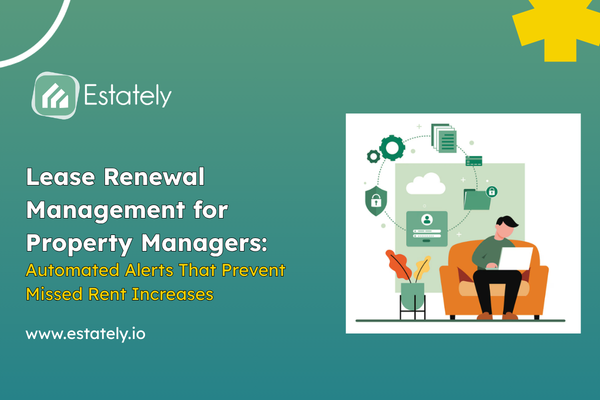
Lease renewal management is a revenue function, not an admin task. Every lease that expires without a managed, timely renewal is a potential income gap lost rent days, a forfeited rent increase, and in the worst case, an expensive vacancy cycle that could have been avoided with a single automated alert sent 90 days earlier.
For property managers running apartment buildings, commercial spaces, co-working facilities, or shopping malls, this is not a hypothetical. 63% of property managers are planning rent increases to offset rising costs but those increases only land if the renewal process is actually managed. Miss the window, and the tenant either rolls over at the old rate or moves out.
The fix is not hiring more staff. It is automating the workflow. This post breaks down exactly what automated lease renewal management looks like, what it costs you not to have it, and how platforms like Estately handle the full cycle from first alert to executed digital contract.
The Real Cost of Skipping Lease Renewal Management
Most property teams know renewals matter. What they underestimate is how fast the cost compounds when the process runs on spreadsheets, calendar reminders, and individual memory.
When a lease expires without action, you typically absorb two to four weeks of vacant rent before the unit is re-listed and re-occupied. Renewing a lease with an existing tenant can save up to $1,000 in turnover costs and that figure does not include the lost rent days during the gap, the make-ready costs, or the management time spent re-advertising. For a 50-unit building where 10% of leases slip through the cracks each year, that number compounds into a material line item.
Then there is the rent increase problem. A manager who misses the renewal window often ends up honoring the old rate by default either because there was no time to negotiate, or because the tenant has already verbally confirmed on old terms. The impact of a failed renewal extends beyond an empty unit lost rent, rushed make-readies, and operational drag compound quickly to erode Net Operating Income (NOI).
Automated lease renewal alerts eliminate this entirely. The system tracks every contract expiry and fires notifications at configurable intervals typically 90, 60, and 30 days out giving the team time to issue the updated offer, apply the new rate, and get a digital signature before the lease ever lapses.
How the Automated Lease Renewal Workflow Actually Works
Lease renewal automation is not a single notification. It is a staged workflow that begins well before the expiry date and ends with a signed contract and updated billing without a single manual step required from your team other than the actual decision to renew.
Here is exactly how the cycle runs inside a platform like Estately's Leases & Contracts module:
Lease Renewal Management by Property Type
The renewal pressure points differ depending on what you manage. A 200-unit apartment building has different challenges than a multi-tenant commercial floor or a co-working space with monthly memberships. The underlying need timely alerts, digital contracts, and applied rent escalation is the same across all of them.
What to Look for in Lease Renewal Software
Not every property management platform handles renewals with the same depth. If you are evaluating tools, these are the capabilities that separate a real lease renewal system from a basic reminder feature.
Configurable alert timelines. You need 90/60/30-day triggers at minimum. A single "expiring soon" notification is not a workflow.
Rent escalation rules built into the renewal. The updated rate should apply automatically based on your predefined rules not require a separate manual step in your billing module.
Digital contract generation from templates. Re-drafting from scratch for every renewal is where the majority of admin time gets consumed. Templates with pre-filled tenant and unit data cut this to minutes.
Full audit trail and version control. Critical for commercial leases where clause amendments are common, and essential for any compliance situation.
Tenant self-service confirmation. 47% of tenants plan to remain at their current rental the highest figure since 2021. A frictionless self-service portal converts that intent into a signed contract faster than a back-and-forth email chain ever will.
Single-dashboard visibility across all properties. If you cannot see every upcoming renewal in one view, you are still operating with blind spots regardless of how good the individual alert system is.
Stop Losing Revenue to Lease Expirations
Property managers often treat lease renewals as administrative milestones. In practice, they are the result of operational consistency and when they fail, the impact compounds quickly into real NOI erosion.
The operators who protect their Net Operating Income year after year are not the ones working harder. They are the ones who have removed manual tracking from the equation entirely. Automated alerts, digital contracts, built-in escalation rules, and a compliance calendar turn lease renewals from a source of anxiety into a predictable, scalable process.
If you manage more than 20 units across any property type, the math is simple: the revenue you lose from a single missed renewal typically exceeds a full year of software subscription costs.
Estately's Leases & Contracts module handles the full renewal lifecycle automated expiry alerts, digital contract execution, rent escalation, deposits, and audit-ready histories, all in one platform. Book a free demo and see it applied to your specific portfolio.